
High-Bandwidth Cabled IoT
Powering the High-Speed Edge

While solar energy harvesting provides autonomy for low-power sensors, high-performance indoor IoT, such as Wi-Fi 6E/7 access points, 4K PTZ cameras, and AI-driven edge compute, demands a "fat pipe" of data and power that only copper can consistently provide. As these devices move into ceilings, parking lots, and perimeter zones, the network must evolve to be both flexible and incredibly fast.
This high-bandwidth ecosystem is made possible through the convergence of three key factors:
- High-Power PoE++: Delivering up to 90W of power alongside 10Gbps data, removing the need for local AC power.
- Extended Copper Reach: Pushing beyond the traditional 100-meter limit to 200m+, allowing for installation flexibility previously reserved for fiber.
Read about when to specify extended reach copper here ▶ link to the article. - The MPTL Architecture: A direct-to-device connection strategy that bridges the gap between structured cabling and high-performance hardware..
The Role of MPTL: Performance vs. Necessity
Is a Modular Plug Terminated Link (MPTL) always necessary? The honest answer is: it depends. For basic low-speed sensors or non-critical connections, a standard patch cord or a simple crimped plug may suffice. However, as you push toward Cat 6A speeds (10Gbps) and high-wattage PoE, the physics of the connection change.
In the past, "direct-plugging" a horizontal cable into a device was often an uncertifiable "hack." These links frequently failed high-frequency testing, were prone to signal imbalance, and couldn't be officially verified by field certifiers. This created a massive reliability gap in industrial deployments.
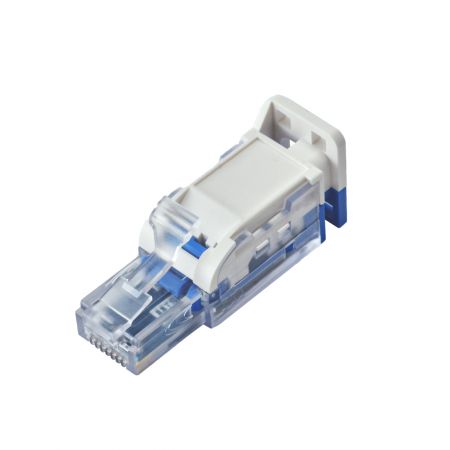
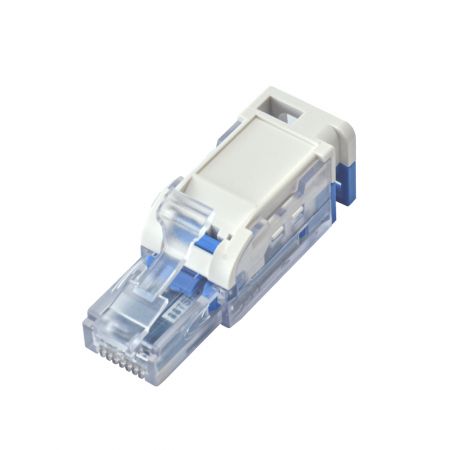
We recommend the MPTL approach because it solves this problem. By using a dedicated field termination plug, you transform a field-made connection into a certifiable industrial link. This allows you to:
- Guarantee Performance: Pass rigorous TIA/ISO certification tests from the patch panel to the device.
- Ensure Stability: Manage the thermal load of PoE++ through high-quality 50μ" gold-plated contacts.
- Simplify Geometry: Remove the bulk of outlet boxes and patch cords in tight spaces, creating a cleaner "architectural" installation.
The Solution: 88TK & 88TSK Series
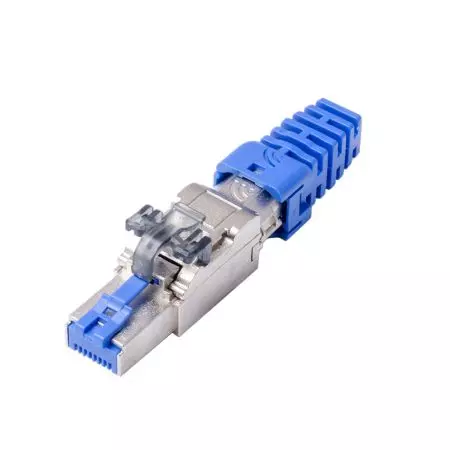
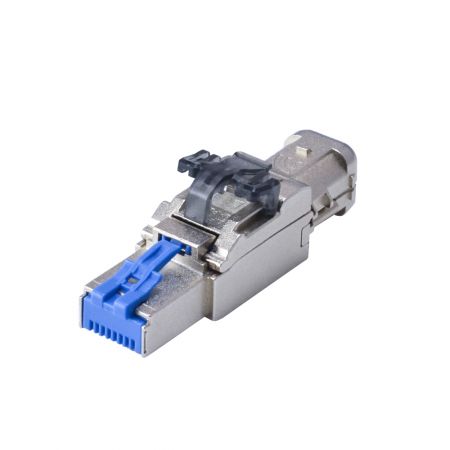
To achieve this level of reliability, we developed the 88TK (Unshielded) and 88TSK (Shielded) Field Termination Plugs. Designed for rapid, toolless assembly, these plugs are the critical components that make high-bandwidth, extended-reach IoT a repeatable reality. They don't just connect a cable; they secure the integrity of your entire network at the edge.
Result 1 - 4 of 4
Result 1 - 4 of 4